Best Electric Forklift Manufacturer and Supplier in China
- Wide Forklift Product Range – One-stop solution for all your material handling needs.
- China’s Largest Electric Forklift OEM Factory – Get the best prices and after-sales support directly from the source.
- Battery Options Available – Choose lead-acid or lithium, or customize based on your specific requirements.
- Best Choice for All Industries – Perfect for warehouses, logistics centers, factories, and ports.
- Flexible Lifting Heights & Strong Capacity – Designed to meet your most demanding handling needs.
- Global Distributor Recruitment – Join us and enjoy the best pricing, technical support, and partnership opportunities.
Recommend Electric Forklift for Sale
Discover our recommended electric forklifts for sale, featuring powerful counterbalance models, compact pallet stackers, versatile reach trucks, and efficient tow tractors. Designed for warehouses, logistics, factories, and ports, they offer zero emissions, strong load capacity, flexible battery options, and advanced safety systems — your ideal solution for modern material handling.


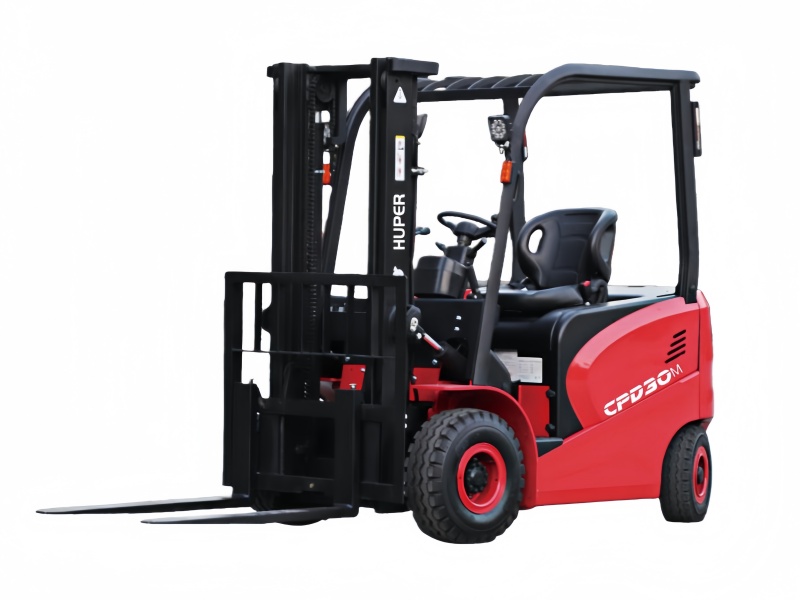


Your Premier Electric Forklift Manufacturer in China
- Independent manufacturing of key components reduces supply risk.
- 20 years of experience in electric forklift production.
- China’s largest OEM electric forklift factory by area.
- In-house production of batteries, chargers, gearboxes, and chassis.
- Complete QA system: IQC, PQC, final QA inspection.
- 50+ engineers drive continuous innovation and quality.
- 800+ skilled workers ensure high assembly precision.
- Integrated painting, mold, and parts workshops on site.
- Strong R&D and production capacity for OEM/ODM.
- Full control over product quality and cost efficiency.


HUPER Electric Forklifts for Various Industries
- High-density goods storage in warehouses.
- Loading/unloading in factories and production lines.
- Material transfer in logistics distribution centers.
- Aisle stacking in supermarkets and retail centers.
- Airport cargo handling and baggage logistics.
- Station goods movement and freight terminals.
- Port and container depot internal handling.
- Cold storage and refrigerated warehouse operations.
- E-commerce order fulfillment centers.
- Assembly line feeding in manufacturing plants.
HUPER – Trusted Chinese Electric Forklift Manufacturer & Supplier
HUPER presents its Electric Forklift series as a proven global solution for B2B distribution and large-scale end-user applications. HUPER is a premier electric forklift manufacturer and supplier based in China. It has two decades of dedicated experience in material handling equipment. Founded on stringent quality control and industry expertise, HUPER’s electric forklifts embody structural integrity, operator ergonomics, energy efficiency, and low maintenance.
The origins of the Electric Forklift trace back to HUPER’s vision to deliver low-emission, high-efficiency handling machines that adapt to modern logistics demands. The HUPER brand has developed from a vast manufacturing footprint—one of the largest electric forklift OEM facilities in China—combining engineering depth with skilled labor to enable OEM/ODM solutions for global B2B partners.
Factory Advantages Driving Differentiation
The HUPER electric forklift factory spans approximately 200,000 m², establishing it as one of the largest electric forklift factories and electric forklift companies in China. It integrates end-to-end production, from battery, charger, gearbox, chassis, to mast, fork, mold, and paint shops. This complete in-house component control mitigates supply chain risks and supports scalable wholesale forklift production. The facility employs over 800 skilled workers and a 50-member engineering team, underpinned by a 100 % quality inspection process across incoming (IQC), process (PQC), and pre-shipment (QA) stages. This structure reinforces product reliability and cost-effectiveness.
Product Advantages: Optimizing Performance
HUPER Electric Forklift series combines robust steel frames with compact agility. Ergonomic operator designs—long handle, EPS steering, control systems—promote comfort and precision. Permanent magnet DC or AC brushless motors deliver energy-efficient power with low heat and noise. Integrated chargers and maintenance-free batteries streamline operations. High-efficiency hydraulic pumps improve lifting responsiveness. These electric forklifts align with “electric powered forklift” and “power forklift” expectations while reducing operating costs and environmental impact.
Applications Across Industries
HUPER’s Electric Forklift fits a spectrum of scenarios: warehouses, factories, logistics centers, supermarkets, stations, ports, airports, cold storage, and e-commerce fulfillment. Its compact turning, precise control, and zero emissions make it suitable for indoor, narrow-aisle operations and outdoor loading alike. The “electric forklift for sale” and “buy electric forklift” appeal addresses global B2B buyers seeking reliable and versatile material handling tools.
Market Position and OEM/ODM Services
As a trusted electric forklift manufacturer and supplier, HUPER leverages its own brand and OEM/ODM service capabilities to serve global wholesale forklift markets. Operating as an electric forklift factory, HUPER offers customized branding, configurations, and scalable production. The combination of strong factory advantages and engineered product benefits positions HUPER among competitive electric forklift brands from China and worldwide.
Global B2B agents and large-scale terminal users are invited to consider HUPER as a strategic partner. Whether seeking “electric forklift China”, “Chinese electric forklift”, or “electric forklift supplier”, your sourcing path leads to HUPER. HUPER’s electric forklift range delivers performance, durability, and trustworthy manufacturing—along with competitive “electric forklift price” and tailored OEM/ODM support.
Frequently Asked Questions About Electric Forklifts
Forklifts are essential tools in warehouses, factories, and logistics operations. They improve productivity by handling heavy loads efficiently and safely. With technology evolving, electric forklifts are becoming more popular due to their eco-friendly design and low operating costs. This FAQ guide answers the most common questions about both traditional and electric forklifts, helping you make informed decisions about equipment, safety, and maintenance.
1. What is a forklift?
A forklift is a powered industrial truck designed to lift, carry, and place palletized or unitized loads using a pair of forks (tines) or specialized attachments. Key points:
-
Core components: chassis, counterweight (on counterbalance types), mast & carriage, forks/attachment, drive & steer axles, power source (electric battery or internal combustion), operator compartment, and safety systems.
-
Main categories: counterbalance (3-wheel/4-wheel), reach truck, pallet truck/walkie, stacker, order picker, very-narrow-aisle (VNA/turret), rough-terrain, and telehandler (not strictly a forklift but often compared).
-
Power options: electric (lead-acid or lithium) for clean, quiet, indoor use; IC (LPG/diesel) for heavy outdoor or multi-shift without charging.
-
Capacity & stability: rated by load capacity at a specified load center (e.g., 4,000 lb @ 24 in). Stability depends on weight distribution and the “stability triangle.”
-
Attachments: sideshifter, fork positioner, clamps (roll, carton), rotators—each affects residual capacity and visibility.
-
Use cases: warehouses, manufacturing, food & beverage, logistics, retail DCs, ports, and construction.
2. What is an electric forklift?
An electric forklift is a powered industrial truck that lifts, carries, and stacks loads using electric drive and lift systems instead of an internal-combustion (IC) engine. It’s the default choice for indoor material handling because it’s quiet, clean at the point of use, and precise to control.
Core components
-
Battery & power electronics: lead-acid (flooded/AGM) or lithium-ion (commonly LFP) pack, battery management system (BMS, on lithium), on-board or external charger, AC motor controllers (inverters).
-
Traction & hydraulics: AC traction motors for drive/steer, separate AC motor for hydraulic pump (lift/tilt/aux).
-
Mast & carriage: rails, chains/rollers, tilt cylinders; forks or attachments (sideshifter, fork positioner, clamps, rotator).
-
Chassis & safety: counterweight (on counterbalance types), operator compartment with presence detection, brakes, lights/alarms, and telematics.
Main electric forklift types
-
Electric counterbalance (3-wheel/4-wheel): general-purpose “classic” forklift for docks, loading, and floor stacking.
-
Reach truck (stand-up or moving mast): optimized for high-bay racking and narrower aisles.
-
Order picker / very-narrow-aisle (VNA): for case-level picking or turret handling.
-
Walkie pallet truck & stacker: short-distance moves and light stacking.
Key specs you’ll see
-
Rated capacity @ load center (e.g., 4,000 lb @ 24 in / 1.8 t @ 600 mm).
-
Lift height & free lift, mast stages (duplex/triplex).
-
Aisle width (AST) & turning radius; gradeability for ramps.
-
Battery capacity (Ah/kWh) and charger power (kW); IP/temperature options for wet or cold environments.
-
Residual capacity with attachments (capacity derates as weight moves forward).
How it operates (in brief)
-
Battery powers AC inverters.
-
Inverters drive the traction motors and the hydraulic pump.
-
Operator lifts/tilts via hydraulic controls; regenerative braking recovers energy during decel/lowering (model-dependent).
-
Stability depends on the stability triangle and keeping the load low and close to the carriage.
Advantages vs. IC trucks
-
Zero tailpipe emissions & low noise → ideal for indoor/food/pharma/retail.
-
High controllability (smooth starts, inching) and lower routine maintenance (no oil/filters, fewer moving parts).
-
Lower energy cost in many regions; compatible with opportunity/fast charging (especially lithium).
Trade-offs to consider
-
Charging infrastructure and electrical capacity required.
-
Runtime sensitivity to load/temperature; lithium handles opportunity charging well, lead-acid needs full cycles and watering/equalize.
-
Environmental limits: rough, wet, or very cold conditions may require special packages (sealed electrics, heaters, higher IP ratings).
-
Capacity derates with tall masts or heavy attachments.
Typical applications
Warehousing and distribution, manufacturing cells and lineside delivery, grocery and beverage DCs, e-commerce fulfillment, cold store (with freezer options), and indoor loading docks.
Selection checklist (quick)
-
Load weight, size, and load center; lift height and rack top-of-load clearance.
-
Aisle width & turning space; floor conditions and ramp grades.
-
Duty cycle (hours/shift, shifts/day) → battery chemistry & charging strategy.
-
Attachments needed and their impact on residual capacity.
-
Environmental factors (dust, moisture, freezer).
-
Safety/telematics requirements and local compliance.
3. Electric lithium forklift
An electric lithium forklift uses a lithium-ion traction battery—commonly LFP chemistry for industrial trucks—managed by a BMS (Battery Management System).
-
Performance: fast/opportunity charging, high energy efficiency, consistent power to low state-of-charge, wide usable SOC window.
-
Uptime: charge during breaks; many fleets eliminate battery swaps and dedicated battery rooms.
-
Maintenance: sealed, no watering/equalize charge; fewer consumables than lead-acid.
-
Life: multi-year cycle life when kept within recommended temperature/SOC windows; BMS logs cycles and events.
-
Safety: integrated BMS, contactor interlocks, thermal monitoring; specify UL/ETL/CE-compliant packs and chargers as applicable.
-
Environment: cold-store options may include pack heaters; confirm charging behavior below 0 °C.
-
Infrastructure: matched chargers (single/three-phase) and connector standards; ensure ventilation/clearances per local codes.
-
TCO: higher upfront cost offset by lower energy and maintenance, plus productivity gains from opportunity charging.
4. New electric forklift VS used electric forklift
New – pros: latest safety & telematics, full warranty, predictable uptime, tailored spec, incentives in some regions, known battery health.
New cons: higher capex, longer lead times for special builds.
Used – pros: lower purchase price, faster availability, good for low-hour or seasonal operations.
Used – cons: unknown duty history, worn mast/steer components, battery degradation (expensive to replace), shorter warranty, more downtime risk.
How to decide:
-
Annual hours: >1,500–2,000 hr? New often wins on TCO; <1,000 hr and light duty? Quality used can work.
-
Lift height & safety features: high mast, cameras, stability options → favor new.
-
Battery health: verify with state-of-health (SOH) report (lithium BMS or lead-acid test), charge cycles, and runtime under load.
-
Inspection: mast chains/rollers, carriage/fork wear (fork heel thickness), steer axle kingpins, hydraulic leaks, error codes, charger condition.
-
Commercials: warranty terms, parts availability, telematics subscription, and buy-back value.
5. How to choose the best electric forklift manufacturer?
-
Product-fit: portfolio depth (counterbalance, reach, pallet), capacity range, mast options, environmental packages (cold store, food grade).
-
Safety & compliance: adherence to relevant truck and electrical standards; traceable conformity files; clear capacity plates and derating charts.
-
Battery & charging tech: proven lithium platform (pack design, BMS features, cold-weather strategy), charger ecosystem, connectors, and data access.
-
Quality & reliability: field MTBF/uptime data, warranty claim rates, supplier quality processes, and component brands (motors, controllers, hydraulics).
-
Service network: local parts availability, technician training, response SLAs, remote diagnostics, and telematics portals.
-
Total cost of ownership: energy efficiency, maintenance intervals, parts pricing, software/licensing fees, and residual value.
-
Customization & engineering: ability to engineer attachments, fork lengths, cabin options, and software settings for your use case.
-
References & trials: site visits, pilot units with defined KPIs (throughput, energy per pallet, downtime), and post-trial report.
-
Commercial terms: warranty (truck, battery, charger), lead times, financing support, and buy-back programs.
-
Transparency: access to manuals, spare parts catalogs, and API/telematics documentation.
6. How to buy/import electric forklifts from China
Steps are similar when importing from other countries; adjust for your jurisdiction.
-
Supplier due diligence: shortlist manufacturers; review certifications (e.g., ISO 9001), factory audits, customer references, and sample/test reports.
-
Spec & contract: lock capacity, mast, attachments, battery type (lithium LFP vs lead-acid), charger voltage/plug, options, labeling, manuals language. Include performance KPIs and penalties.
-
Compliance planning: confirm required conformity marks and standards for your market (e.g., CE/EN ISO 3691-1 in the EU; ANSI/ITSDF B56.1 and OSHA operator requirements in the US; local electrical approvals for chargers; environmental and recycling obligations).
-
Battery & DG docs: obtain UN 38.3 test summary for the lithium pack, MSDS/SDS, charger certificates, and safe transport declarations.
-
Trade terms: choose Incoterms 2020 (EXW/FOB/CIF/DDP); define risk transfer, delivery port, and who handles customs and duties.
-
HS code & duties: confirm the correct tariff classification (forklifts typically fall under HS heading 8427) and estimate duty/VAT with your broker.
-
Quality control: pre-production sample (if customized), FAT (Factory Acceptance Test), pre-shipment inspection with AQL, and container loading supervision.
-
Logistics: pick FCL vs LCL; book transit; ensure marine cargo insurance (ICC A); plan lead times and buffer.
-
Customs clearance: file importer registrations, provide commercial invoice/packing list/Bill of Lading/certificates of origin; coordinate with your customs broker.
-
Arrival & PDI: receive, uncrate, pre-delivery inspect (safety systems, brakes, mast chain tension, charger setup), update decals/labels to local language, and train operators.
-
After-sales readiness: stock critical spares, agree on warranty support, and set up charger power supplies and safe charging areas.
Tip: Work with a reputable freight forwarder and a local compliance lab for document review before the first shipment.
7. What types of forklifts are available?
There are several types of forklifts, each suited for different environments and tasks:
-
Counterbalance Forklifts – The most common type, ideal for loading and unloading pallets.
-
Reach Trucks – Designed for narrow aisles and high-rack storage.
-
Pallet Jacks – Compact machines used for moving pallets over short distances.
-
Rough Terrain Forklifts – Built with large tires and strong engines for outdoor, uneven surfaces.
-
Electric Forklifts – Quiet and emission-free, best for indoor use.
8. How to wholesale electric forklifts?
-
Define the line-up: capacities, mast heights, chassis types (3-wheel/4-wheel counterbalance, reach, pallet trucks), attachments, and target industries.
-
MOQ & pricing: set minimum order quantities, tiered discounts, demo units, and spare-parts starter kits.
-
Branding: choose OEM/ODM options, colorways, decals, data plates, manuals, and digital assets.
-
Territory & exclusivity: negotiate territory scope, performance targets, and non-compete clauses.
-
After-sales model: stock common spares (filters, sensors, brake parts, contactors), define RMA flow, warranty labor rates, response SLAs, and technician training.
-
PDI & QC: establish pre-delivery inspection checklists; require factory QC data; agree on acceptance criteria and documentation.
-
Logistics: decide Incoterms (FOB/CIF/DDP), choose forwarder, insurance, and packaging specs (blocking/bracing, corrosion protection).
-
Compliance: ensure product certifications and manuals meet local regulations; include charger and battery documentation.
-
Marketing & enablement: co-op funds, literature, spec sheets, photo/video, case studies, and demo roadmaps.
-
Data & telematics: standardize fleet reporting (hours, utilization, impacts, fault codes), API access if needed.
9. What is a forklift used for?
A forklift is a powered industrial vehicle designed to lift, carry, and move heavy loads over short distances. It is commonly used in warehouses, factories, construction sites, and shipping yards. By allowing workers to transport pallets and bulky materials quickly, forklifts improve efficiency and reduce the need for manual lifting.
10. What type of forklift is best for indoor use
-
Electric counterbalance (3-wheel or 4-wheel): zero emissions, low noise, tight turning (3-wheel excels in tighter aisles). Great generalist for receiving, put-away, and dock work.
-
Reach truck (stand-up): best for high-bay racking; pantograph or moving mast reaches into racks; excellent lift heights with narrow aisles.
-
Order picker: for case-level picking at height; requires wire guidance or rail guidance in many facilities.
-
Walkie pallet truck/stacker: economical for short runs and light stacking.
-
Tires: cushion or non-marking for smooth floors; specify non-marking where cleanliness matters (food/pharma/retail).
-
Power: electric (lead-acid or lithium). IC (LPG) can be used with ventilation, but electric is generally preferred indoors.
11. How do electric forklifts work?
Electric forklifts use a large battery that powers an electric motor. The motor drives the wheels and hydraulics, allowing the machine to lift, tilt, and move loads. Operators control the forklift through pedals and levers, similar to driving a car, but with specialized functions for lifting and lowering forks.
12. Are electric forklifts good?
Yes. Electric forklifts are excellent for indoor environments due to their low noise, zero emissions, and lower long-term operating costs. They also require less maintenance than diesel or propane forklifts since they have fewer moving parts. However, they may not be ideal for continuous outdoor use or heavy-duty rough terrain.
13. Can electric forklifts be used in the rain?
Electric forklifts are generally designed for indoor use. While occasional light rain exposure may not immediately damage them, continuous use in wet or flooded conditions is unsafe. Moisture can affect electrical components and reduce battery life. If outdoor use is necessary, protective covers or specialized weatherproof models should be considered.
14. How long do electric forklift batteries last?
Most electric forklift batteries last between 5 to 7 years, depending on usage and maintenance. A fully charged battery usually provides 6–8 hours of continuous operation, equal to a standard work shift. Proper charging habits and regular maintenance extend battery lifespan.
15. Do electric forklifts need fire extinguishers?
Yes. Even though electric forklifts don’t use flammable fuel, fire safety is still important. Batteries can overheat or leak in rare cases, so most workplaces require a fire extinguisher nearby, especially when charging stations are in use.
16. How many horsepower is an electric forklift motor?
Electric forklift motors vary in power. A typical warehouse model ranges from 15 to 30 horsepower (HP), while heavy-duty models may reach 50 HP or more. The exact power depends on load capacity and lifting requirements.
17. How much does an electric forklift cost?
Prices vary based on size, capacity, and battery type:
-
Small indoor electric forklifts: $15,000 – $25,000
-
Standard warehouse models: $25,000 – $40,000
-
Heavy-duty or high-capacity units: $50,000+
Battery replacement costs (around $3,000 – $7,000) should also be factored into long-term ownership.
18. How much does an electric forklift weigh?
Electric forklifts are heavy because of their batteries, which act as counterweights. A standard model usually weighs 7,000 to 10,000 pounds, while larger units may exceed 15,000 pounds.
19. How much electricity does a forklift use?
An electric forklift typically consumes 15–25 kWh of electricity per full battery charge. Costs vary depending on local electricity rates, but running an electric forklift is generally cheaper than fueling propane or diesel models.
20. How to charge an electric forklift?
-
Park the forklift in the designated charging area.
-
Turn off the forklift and connect the charger to the battery plug.
-
Ensure proper ventilation, as charging releases small amounts of gas.
-
Follow the manufacturer’s recommended charging cycle—avoid partial charges to extend battery life.
21. How to drive an electric forklift?
Operating an electric forklift is similar to driving a car but requires specialized training. Operators must:
-
Use pedals for forward and reverse movement.
-
Control lifting, tilting, and lowering using hydraulic levers.
-
Maintain safe speeds and follow warehouse traffic rules.
22. How to operate an electric forklift safely?
Safe operation includes:
-
Completing daily equipment inspections.
-
Wearing protective equipment like helmets and safety shoes.
-
Keeping loads balanced and within capacity.
-
Driving at controlled speeds, especially around corners.
23. How to start an electric forklift?
Starting is simple:
-
Insert the key or switch on the power.
-
Ensure the parking brake is engaged.
-
Select the direction of travel (forward or reverse).
-
Release the brake and press the accelerator smoothly.
24. How to change the speed on an electric forklift?
Most electric forklifts allow speed adjustment through onboard settings or operator controls. Some models have an “eco” mode for energy-saving and a “power” mode for heavy loads. Only trained personnel should adjust these settings to ensure safety.
25. How to move a dead electric forklift?
If a forklift battery is completely discharged:
-
Use a tow tractor or another forklift to move it.
-
Place the forklift in neutral before towing.
-
Never push it with forks, as this can damage the frame.
-
Recharge the battery as soon as possible.
26. How to properly wash an electric forklift?
-
Use a damp cloth or low-pressure washer.
-
Avoid spraying water directly onto electrical components or battery terminals.
-
Use non-corrosive cleaning solutions.
-
Dry thoroughly before reuse.
27. What is the best electric forklift?
The “best” electric forklift depends on your needs:
-
Narrow aisles → Reach trucks.
-
Heavy loads → High-capacity counterbalance forklifts.
-
General warehouse use → Standard 3–4 wheel electric forklifts.
Brands like Toyota, Hyster, and Jungheinrich are highly regarded for reliability and efficiency.
28. What’s the difference between propane-powered forklifts and electric forklifts?
-
Propane Forklifts: Stronger for outdoor use, quick refueling, better for heavy-duty applications, but produce emissions.
-
Electric Forklifts: Cleaner, quieter, and cheaper to run indoors, but require charging time and may be less effective outdoors.
29. How high should a load be carried on a forklift
-
General travel height: keep the load/forks 4–6 inches (10–15 cm) above the floor, mast slightly tilted back.
-
Reasons: lowers the center of gravity, reduces tip-over risk, keeps forks from striking floor joints/ramps.
-
Exceptions: rough surfaces may need slightly more clearance; on ramps, keep load upgrade and add tilt-back; when approaching obstacles, stop and lift only as needed.
-
Never travel with an elevated load unless creeping a very short distance for precise positioning—and only if site rules allow.
-
Visibility: if the load blocks the view, travel in reverse (if safe) or use a spotter.
 EN
 ES
 AR
 RU
 FR
 PT
 DE
 IT